

- Solar Lights, also known as solar lamps or lanterns, are a lighting system comprising an LED lamp, solar panels, a charge controller, a battery, and an inverter.
- The five steps of the solar light operation are sunlight accumulation, transfer of positively-charged spaces, storage of energy in photovoltaic cells, signaling LED to glow when dark, and reassuring the whole system’s flow and security.
- The probability of long-term use of solar light is possible if you clean your apparatus often, check for damage, and adequately charge panels.
Solar lights have made harnessing power from the sun possible. They are a reliable and renewable solution to energy demand. Solar panels can be installed on the rooftops of buildings, gardens, and even street lights. Some of you may also have solar lights installed in your houses.
But have you ever wondered how solar lights work? What is the mechanism behind such a revolutionizing system?
Well, it is simple science, and in the following segment, we will explain solar lights, their components, and their working mechanism in detail.
Table of Contents
What are Solar lights?
Solar Lights, also known as solar lamps or lanterns, are a lighting system comprising an LED lamp, solar panels, a charge controller, a battery, and an inverter. The LED lamp lights up using electricity generated from batteries.
The solar light’s battery uses the photovoltaic effect to charge the ions. This effect efficiently converts light into electric power based on which the solar lights operate.
Components of a Solar Light
Four significant solar light components are solar panels, a battery, control electronics, and a light fixture. We will explain each part below to help you know the basics:
Solar Panels
These are semiconductor materials made from single crystalline silicon. Every solar cell has two layers of silicon.
The upper panel layer has more electrons and thus has a negative charge. The lower panel layer has fewer electrons than the upper panel, so it has a slightly positive charge. A potential barrier separates these two-panel layers.
Battery
A solar light system contains a battery placed within a metal or plastic casing. The battery may contain lead-acid, nickel-metal hydride, or lithium ions. The battery case also includes cathodes and electrodes where the chemical reaction occurs.
The two electrodes are separated to stop them from reacting while allowing charge to flow between them. This reaction charges the battery. Finally, a collector helps to conduct the charge from the battery outside.
Charge Controller
A charge controller is a device that controls and ensures the entire system is working correctly. It protects the system from damage or over-discharge under extreme weather conditions such as rainfall and wind.
A charge controller includes a light controller, time controller, temperature compensator, lightning protection unit, reverse polarity inhibitor, and AC transfer switches.
Light Fixture
A light fixture is the lighting part of the solar light. It uses LED light bulbs installed on an electrical circuit. The LED lights are far more efficient and conserve energy than filament bulbs. They don’t heat up; thus are safe around children or pets.
Working Principles of Solar Lights
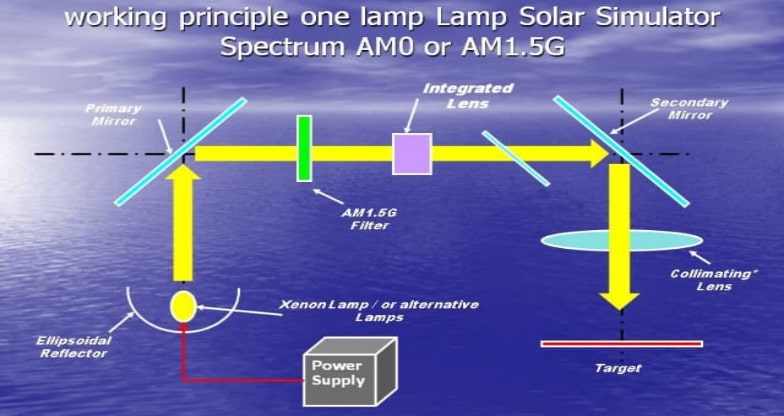
Now that we have mentioned the components of solar lights, let us dive into their working mechanism:
- When sunlight passes through the solar panel, the rays excite the negatively charged electrons and push them through the potential barrier into the positively charged panel.
- The positively charged spaces transfer the electrons as Direct Current into the battery through the embedded wires.
- The battery charges and stores electricity throughout the day as long as sunlight passes through the solar panel. This conversion of sunlight to electricity is known as the photovoltaic effect. A photovoltaic cell is a component that converts solar into electrical energy.
- As the sunlight weakens and disappears when evening approaches, the photoreceptor detects when it is getting dark. It then signals to turn on the LED lights. The stored energy in the battery is later released as Direct Current to supply power for the LED to light throughout the night.
- The charge controller ensures protection against any possible damage to the system.
These five steps repeat on a daily cycle. During the day, solar energy is converted to electricity and stored in a battery. During the night, the stored power lights the LED bulbs.
Charging the battery should not be a problem in the summer. However, in winter, the sun’s rays are not powerful enough, and the days are shorter. The solar light may not receive enough sunlight to charge the battery sufficient for the whole night. So you should place the solar light where it can receive direct sunlight throughout the day. Make sure no bush, tree, or object blocks sunlight.
Benefits of Solar Lights
Solar lights are a bit more expensive than the old electrical lighting system. But in the long run, solar lights are much more beneficial. The beneficial uses of solar lights are garden lights, solar string lights, decorative lights, solar flagpole lighting, solar batteries, solar bollards, and solar street lights. We will highlight the many benefits of solar lights below:
- Solar lights are easier to install.
- Solar lights reduce maintenance costs and electricity bills.
- Solar electricity helps conserve energy and thus is environment-friendly.
- Solar lights are best for use in remote areas where there is a lack of reliable electrical energy supply.
- The use of solar lights minimizes pollution resulting from the use of kerosene-based traditional lights in rural households.
- Solar lights are a convenient, cost-effective, durable, and advanced system to light up the streets and homes.
What To Do When Solar Lights Are Not Working?
Solar lights are a durable lighting system. But sometimes, some problems might occur that dysfunction the unit. So here are eight things you must follow when your solar lights are not working:
- Check if you’ve turned the switch on.
- Check if there is a pull tab on the battery if the system is newly purchased.
- Solar panels do not work during the day. So cover the panel to test if the lights are working.
- Always keep the solar panel clean.
- Make sure the solar panel is placed directly under the sun.
- If the lights are still not working, test the light using regular batteries.
- Switch the solar light off and leave it to charge for at least 72 hours.
- If the solar light is still not working, it is time to put the warranty to use. Contact the retailer for replacement or repairs.
Research by E Martin suggests that the robust nature of solar panels has a shelf life of 25 years, with lights providing service for 100,000 hours. The innovation in environmentally friendly solar lights has come far since the research. All these features in the solar product have outgrown themselves, making solar lights the best option for a bright future.
